
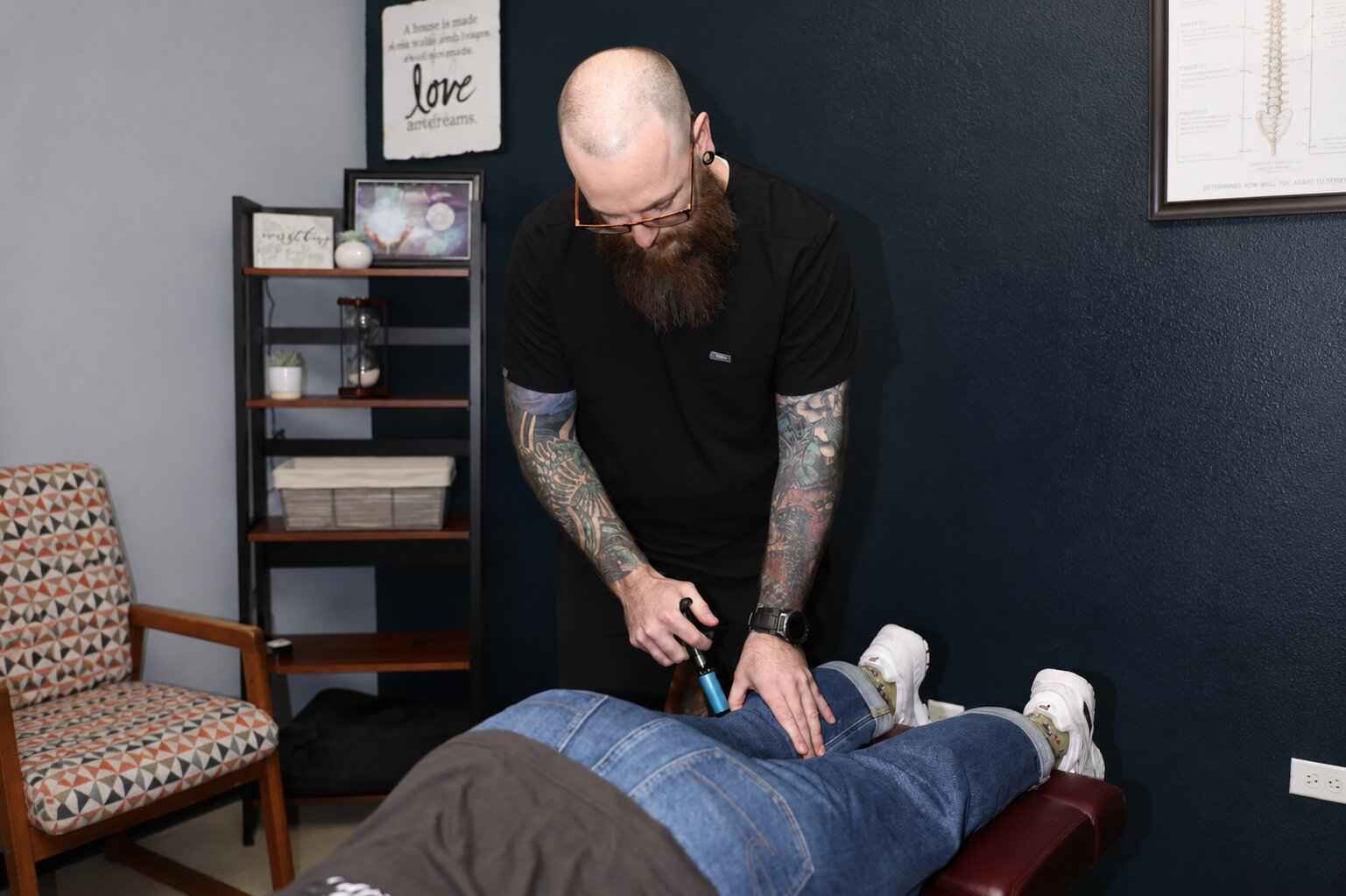
Sciatica is one of the most frustrating conditions our Greeley patients come to us with, not because it can’t be treated, but because so many people have been told conflicting things about what causes it and what to do about it. Some are advised to rest completely. Others are pushed into surgery before exhausting conservative options. Many are simply given anti-inflammatory medications and sent home.
At Health by Design Chiropractic in Greeley, CO, we take a different approach. We view sciatica as a symptom with a specific, identifiable root cause that can often be addressed through targeted chiropractic care, movement therapy, and lifestyle modifications, without surgery or long-term medication use. In this post, our chiropractor walks through five factors that significantly influence how quickly and completely a patient recovers from chronic sciatica.
What Is Chronic Sciatica?
The sciatic nerve is the largest nerve in the human body, running from the lower spine through the buttocks and down each leg to the feet. When this nerve becomes compressed or irritated by a herniated disc, bone spur, piriformis muscle, or narrowed spinal canal, the result is the familiar shooting, burning, or radiating pain known as sciatica.
Sciatica is considered ‘chronic’ when symptoms persist for 12 weeks or longer. At this stage, the condition has usually moved beyond simple inflammation into a pattern that involves changes in how the nervous system processes pain, muscle compensation patterns, and often psychological factors like fear of movement or frustration.
The good news: chronic sciatica is very treatable. But understanding what’s driving your specific case is essential to choosing the right path forward.
Factor 1: The Root Cause of Your Nerve Compression
Not all sciatica is the same, and the underlying cause of nerve compression has a major impact on how your body responds to treatment. The most common causes we see in Greeley patients include:
• Lumbar disc herniation – A damaged disc bulges and presses on the nerve root. This responds very well to chiropractic spinal adjustment and flexion-distraction techniques.
• Piriformis syndrome – The piriformis muscle in the buttocks irritates the sciatic nerve. Soft tissue therapy and myofascial release are often more effective than spinal adjustments alone.
• Spinal stenosis – Narrowing of the spinal canal puts pressure on nerve roots. A careful, decompression-focused approach is needed.
• Degenerative disc disease – Worn-down discs reduce the space where nerves exit the spine. Ongoing chiropractic care combined with targeted exercise can slow progression.
• Spondylolisthesis – A vertebra has slipped forward over another. Stabilization exercises and controlled spinal care are key.
A proper examination, including orthopedic testing, neurological assessment, and imaging, is essential to identifying the correct root cause before beginning treatment. Our integrated wellness clinic is located near Bittersweet Park in Greeley, CO, making it easily accessible for patients throughout Weld County, Evans, and Windsor.
Factor 2: Duration and Severity of Symptoms
How long you’ve been dealing with sciatica matters. Research consistently shows that patients who seek care within the first few weeks of symptom onset have better outcomes than those who wait months or years. This is because early intervention prevents the nervous system from forming chronic pain pathways and stops compensatory movement patterns from becoming entrenched.
That said, chronic sciatica is absolutely treatable even when it’s been present for years. It simply requires more patience, consistency, and a multi-modal approach. Patients in Greeley who commit to a full course of chiropractic treatment including adjustments, therapeutic exercises, and supportive therapies consistently see meaningful improvement.
Factor 3: Lifestyle Habits That Perpetuate Pain
Many patients are surprised to discover that their daily habits are actively working against their recovery. Common lifestyle factors that worsen chronic sciatica include:
• Prolonged sitting – Compresses lumbar discs and tightens hip flexors, increasing nerve pressure.
• Poor sleep posture – Sleeping on your stomach or in a twisted position puts uneven stress on the lumbar spine.
• Excess body weight – Increases compressive load on the lumbar spine and discs.
• Smoking – Impairs blood flow to spinal discs, accelerating degeneration.
• Sedentary lifestyle – Weak core muscles fail to support the spine properly.
• Chronic stress – Increases muscle tension and lowers the body’s pain threshold.
Our team at Health by Design Chiropractic will work with you not just on in-clinic treatment but on practical lifestyle changes that support your recovery between appointments. Small adjustments to how you sit, sleep, move, and manage stress can dramatically change your trajectory.
Factor 4: Prior Treatments and Their Outcomes
Your treatment history matters. Patients who have had multiple cortisone injections, failed surgeries, or prolonged periods of bed rest sometimes have more complex recovery journeys, not because their condition is hopeless, but because previous interventions may have masked symptoms, created scar tissue, or weakened supportive muscles.
We approach these cases with particular care. Our chiropractors in Greeley take a full history, including all previous treatments, surgeries, and diagnostic findings, before developing your personalized care plan. Patients who have ‘tried everything’ often find that a truly integrated approach, one that addresses the nerve, the surrounding musculature, the spine, and the whole person produces results that piece-by-piece treatments never achieved.
Factor 5: The Treatment Approach You Choose
Perhaps the most important factor of all is the treatment philosophy your provider uses. Sciatica responds best to a holistic, multi-modal approach rather than any single intervention. At Health by Design Chiropractic, our back pain treatment in Greeley combines:
• Chiropractic spinal adjustment to restore proper vertebral alignment and reduce nerve pressure.
• Flexion-distraction therapy to gently decompress lumbar discs.
• Myofascial release and soft tissue therapy for piriformis and surrounding muscles.
• SoftWave therapy to reduce inflammation and stimulate healing at the tissue level.
• Corrective exercises to build core stability and postural support.
• Lifestyle and ergonomics guidance for lasting results.
This comprehensive approach is why our Greeley patients consistently report better outcomes than they achieved with isolated treatments like medication alone or a single round of physical therapy.
How Chiropractic Care Addresses Sciatica
Chiropractic treatment for sciatica works by addressing the mechanical causes of nerve compression. A precise spinal adjustment can restore vertebral alignment, reduce disc pressure on nerve roots, and improve the overall function of the lumbar spine. This isn’t guesswork, it’s a targeted, evidence-informed intervention.
At Health by Design Chiropractic, our Greeley chiropractors are trained in multiple adjustment techniques and will select the approach best suited to your anatomy, comfort level, and diagnosis. Whether that means a firm manual adjustment, a gentle instrument-assisted technique, or a traction-based approach, we meet you where you are.
If sciatica has been limiting your life, contact our chiropractic clinic in Greeley, CO today to schedule your comprehensive evaluation.
Conclusion
Chronic sciatica doesn’t have to be a life sentence. Understanding the five factors that influence your recovery—the root cause, how long you’ve had it, your lifestyle habits, your treatment history, and the approach you choose going forward—puts you in a much stronger position to heal.
At Health by Design Chiropractic in Greeley, CO, we’re here to help you understand your condition and build a clear, evidence-based path to recovery. Call us today or visit Health by Design Chiropractic to schedule your evaluation with one of our experienced Greeley chiropractors.
Disclaimer
The information provided in this article is for educational purposes only and should not be substituted for medical advice. While many patients experience significant relief through integrated chiropractic care and SoftWave therapy, a comprehensive clinical evaluation is required to determine the specific root cause of your pain and your eligibility for treatment.
Frequently Asked Questions
1. Can a chiropractor fix sciatica permanently?
Chiropractic care can resolve the underlying cause of sciatica for many patients, particularly when the root cause is a herniated disc, misalignment, or muscle imbalance. ‘Permanent’ results depend on the cause, the patient’s commitment to treatment, and lifestyle factors. Most patients experience significant and lasting improvement with a complete course of care.
2. Is it safe to get a chiropractic adjustment when I have sciatica?
Yes, when performed by a qualified chiropractor who has properly assessed your condition. Our Greeley chiropractors use examination and, when indicated, imaging to ensure adjustments are appropriate and safe for your specific situation.
3. How long does it take to recover from chronic sciatica with chiropractic care?
Recovery timelines vary based on the five factors discussed in this post. Many patients see meaningful improvement within 4 to 8 weeks of consistent care. Chronic cases may take 3 to 6 months for full resolution.
4. Should I rest or stay active with sciatica?
Neither complete rest nor pushing through severe pain is ideal. A combination of gentle movement, walking, gentle stretching, and prescribed therapeutic exercises typically produces better outcomes than bed rest. Your chiropractor will guide you on appropriate activity levels.
5. Can sciatica come back after chiropractic treatment?
It can, particularly if the underlying lifestyle factors like posture, core strength, body weight, and activity level aren’t addressed. Our team focuses on long-term prevention as well as immediate relief, giving you the tools to maintain your results.